


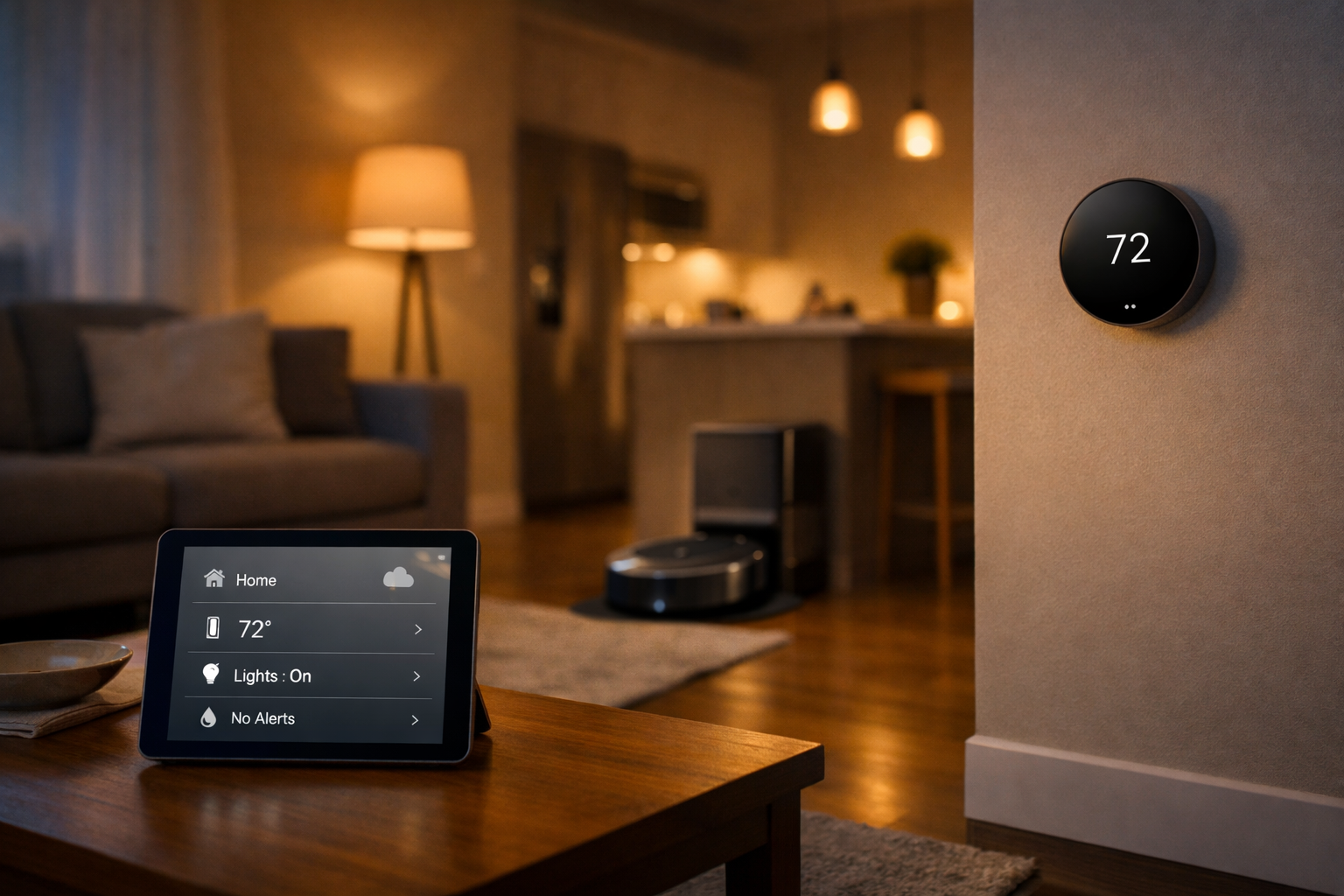
Checking your phone to see if you locked the front door gets old fast. So does manually adjusting the thermostat every time the weather shifts, or realizing your basement flooded three days after it happened. The smartest home devices aren’t the ones you control—they’re the ones that learn your patterns and handle problems before you notice them.
According to Deloitte’s connectivity survey, 77% of smart home users report that these technologies genuinely improve their quality of life. The key isn’t more control—it’s less mental load.
Thermostats That Think Ahead
Learning systems cut energy bills without constant programming.
Google Nest Learning Thermostat and Ecobee models use occupancy detection to map your schedule, then adjust temperature automatically. No manual programming required—they observe when you’re home, asleep, or away, then optimize comfort and energy usage accordingly.
Independent testing shows smart thermostats deliver noticeable utility savings when properly configured, but the real benefit is never thinking about temperature again. Your home stays comfortable while you focus on literally anything else.
Vacuums That Empty Themselves
Robot cleaners with self-emptying docks eliminate the chore entirely.
High-end robot vacuums like the iRobot Roomba Combo j9+ and Roborock models now feature self-emptying docks that transfer debris to larger bins automatically. Combined with LiDAR mapping and room-by-room cleaning schedules, these machines maintain consistently cleaner floors than occasional manual vacuuming.
Reviews consistently show they work best on hard floors and low-pile carpet, turning floor maintenance into a background process like your phone’s overnight software updates. Robotic pool cleaners also save you time and energy, which you can put to good use.
Sensors That Prevent Disasters
Smart detectors catch problems before they become expensive emergencies.
Smart leak detectors from Moen and others send smartphone alerts the moment they detect moisture near appliances or water heaters—some even integrate with shutoff valves to stop flow automatically. Meanwhile, indoor air pollutants run 2-5 times more concentrated than outdoors. According to EPA data, they cause headaches and fatigue that smart air quality monitors can detect and trigger purifiers to address.
Google Nest Protect adds spoken alerts and self-testing to smoke and CO detection. These aren’t convenience features—they’re insurance policies that actually prevent damage.
Lighting That Follows Your Biology
Circadian-tuned bulbs support natural sleep cycles without manual adjustment.
Philips Hue and similar smart lighting systems automatically shift from bright, cool light in the morning to warm, dim light at night, following your circadian rhythms instead of fighting them. Pre-programmed schedules eliminate the decision fatigue of manually adjusting lights throughout the day, while supporting better sleep and wakefulness naturally.
It’s like having a lighting designer who actually understands human biology working in your home 24/7.
The best smart home gear works like a competent assistant—anticipating needs, preventing problems, and staying invisible until needed.
