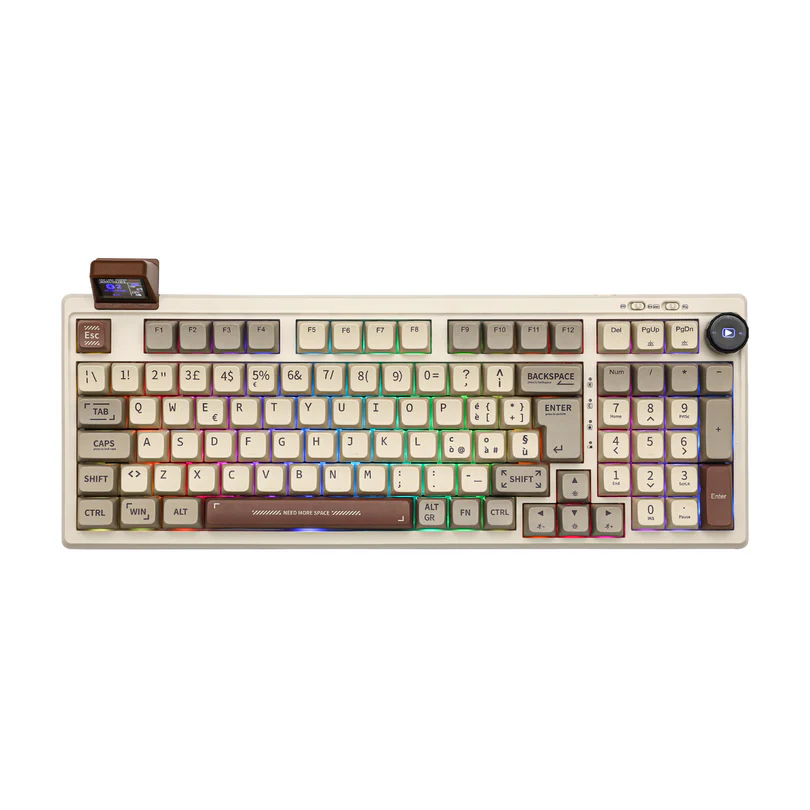



The mechanical keyboard market is flooded with boards that promise a better typing experience and end up feeling interchangeable. The Epomaker RT100 takes a different route. It leans into a retro-inspired design, then quietly stacks modern features underneath—wireless connectivity, hot-swappable switches, and even a detachable mini display. It’s equal parts nostalgic and functional, with just enough quirks to stand out.
A Retro Design That Actually Works
At first glance, the RT100 looks like it belongs next to a beige desktop from the early ’90s. The chunky legends, thick PBT keycaps, and muted color tones all play into that aesthetic.

Underneath, though, it’s built for modern workflows. The 95% layout (97 keys) keeps the number pad and function row intact while trimming excess space. That means you’re not sacrificing productivity for style—everything you need is still within reach.
The Typing Experience Is Where It Wins
This is where the RT100 starts to justify itself.
It uses a gasket-mounted structure with internal foam layers, which softens keystrokes and reduces vibration. The result is a smoother, more cushioned typing feel compared to standard mechanical boards. If you’ve ever used a harsh, rattly keyboard, the difference is immediate.
Switch options matter here too. The “Sea Salt” silent switches are a standout, offering a light, quiet press that works well in shared environments or long writing sessions.

In practical terms: this is a keyboard you can use all day without fatigue—or annoying everyone around you.
The Built-In Display Is Odd… and Surprisingly Useful
The most talked-about feature is the detachable mini display sitting in the top corner.
Epomaker markets it as a “mini TV,” and while that sounds gimmicky, it’s more flexible than expected. You can load custom GIFs, monitor system stats, or display simple info like battery levels.
Is it essential? Not really.
Is it fun? Definitely.
 That said, the software setup can feel inconsistent depending on your system, so it’s not always plug-and-play.
Built for Flexibility Across Devices
The RT100 isn’t just about aesthetics. It supports tri-mode connectivity—Bluetooth, 2.4GHz wireless, and wired USB—so it works seamlessly across desktops, laptops, and tablets.
Inside, there’s a 5,000mAh battery that can last days or even weeks depending on usage and lighting settings. That’s more than enough for most workflows without constantly reaching for a cable.
And for enthusiasts, the hot-swappable PCB means you can change switches without soldering—making it easy to fine-tune the typing feel over time.
Where It Feels Less Polished
For all its strengths, the RT100 has a few rough edges.
The volume knob doesn’t quite match the premium feel of the rest of the board. It works, but it feels like an afterthought. The companion software can also be hit-or-miss depending on your setup, and the display—while fun—won’t be a must-have for everyone.
None of these are deal-breakers, but they’re worth knowing before buying.
Strong Value in a Crowded Market
The RT100 typically sits in the $100–$120 range, which makes its feature set more compelling.
You’re getting:
A compact full-size layout
Quality keycaps and switch options
Wireless flexibility across devices
A design that actually stands out
In a category where prices can easily double, that’s a solid value.
Who This Keyboard Is Really For
The RT100 isn’t built for minimalists. It’s designed for people who want their desk setup to feel a little more personal.
It makes the most sense if you:
Type for long stretches and want a smoother feel
Prefer quieter mechanical switches
Like customizing both performance and aesthetics
Don’t mind a bit of personality baked into your gear
If you’re after a clean, no-frills keyboard, there are simpler options. But if you want something that feels different every time you sit down, the Epomaker RT100