


Most portable fans promise relief. Few actually deliver it without sounding like a jet engine or feeling like a toy. The Dyson HushJet Mini Cool positions itself differently—a compact, travel-ready cooling device built around airflow efficiency and low noise, not just raw power.
At $99.99, it’s clearly not competing with budget handheld fans. It’s trying to redefine what a portable cooling gadget should feel like.
A Different Approach to Portable Cooling
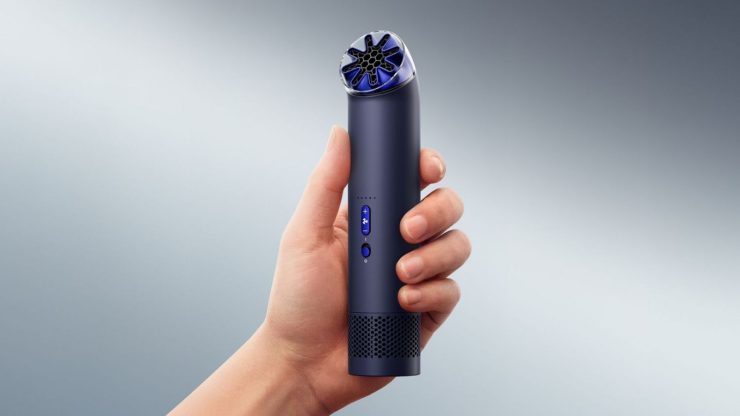
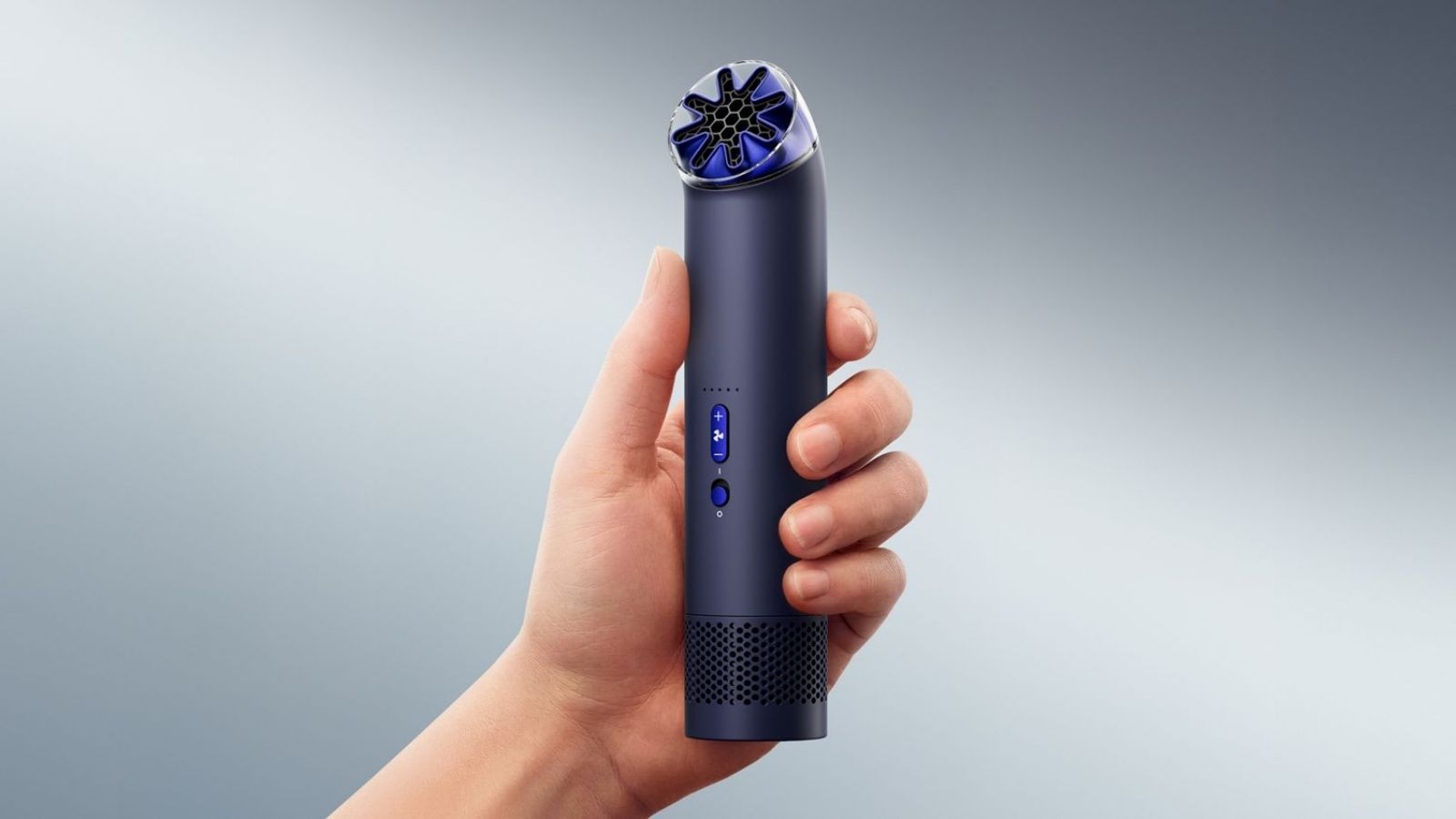
At the core of the HushJet Mini Cool is Dyson’s redesigned airflow system. Instead of relying on traditional spinning blades, it uses a star-shaped nozzle that smooths and focuses airflow while reducing turbulence.
That design choice matters more than it sounds. Less turbulence means less noise—and that’s where most handheld fans fall apart. Dyson is clearly prioritizing quiet performance here, aiming for something you can use in an office, on a train, or mid-flight without drawing attention.
For a category filled with noisy, disposable-feeling devices, that alone sets a different tone.
Power When You Actually Need It
Despite its size, this isn’t a weak airflow gadget.
The fan offers multiple speed settings for everyday use, along with a Boost mode that pushes air up to 55 mph. That kind of output puts it closer to a serious personal cooling device rather than a novelty item.
In real-world use, that means it can handle more than just mild discomfort—it’s built for hot commutes, crowded spaces, or travel situations where airflow actually matters.
Designed for How People Actually Use It
One of the more practical aspects of the HushJet Mini Cool is its flexibility.
The rotating nozzle allows for multiple configurations:
- Handheld for on-the-go use
- Worn with a neck dock for hands-free cooling
- Placed in a charging stand for desk use
That 3-in-1 approach makes it easier to integrate into daily routines without needing separate devices for different scenarios.
It’s a small detail, but it’s the kind of design thinking that separates a gadget from something you actually keep using.
Battery Life That Matches Its Use Case
Inside, there’s a 5,000mAh battery that delivers up to six hours of runtime depending on usage. Charging happens via USB-C and takes around three hours to fully top up.
That’s enough to cover a commute, a work session, or a stretch of travel without constantly worrying about battery life.
Compact, Lightweight, and Safer by Design
Weighing just under half a pound and measuring roughly 1.5 inches in diameter, the device is easy to toss into a bag or carry without thinking twice.
The bladeless design also removes one of the biggest annoyances of traditional portable fans—exposed spinning blades. That makes it safer to use around kids, in tight spaces, or while multitasking.
The Price Question
At $99.99, this isn’t an impulse buy.
You can find portable fans for a fraction of the cost, many of which deliver decent airflow. The difference here is refinement—quieter operation, more controlled airflow, and a design that feels built for repeat use rather than short-term convenience.
That makes the value proposition pretty specific.
Who This Is Actually For
The HushJet Mini Cool makes the most sense if you:
- Commute regularly in warm conditions
- Travel often and want reliable personal cooling
- Work in environments where noise matters
- Prefer well-designed gear over disposable accessories
If you just need occasional airflow at home, cheaper options will get the job done. But if you want something that feels engineered rather than assembled, this sits in a different category.
A Small Gadget That Solves a Real Problem
Portable cooling hasn’t changed much in years. Most products focus on price or size, not experience.
The Dyson HushJet Mini Cool takes a more deliberate approach—less about raw specs, more about how it actually feels to use.
And that raises a simple question:
Once you use a quieter, more refined fan like this… do the cheaper ones start to feel outdated?